- Author jon_k /
- 0 comments /
- December 3, 2025
Table saws are central to woodworking projects but remain one of the most hazardous machines in any shop. At Kzoo Makers, consistent safe practice is necessary not only for personal safety but also for maintaining shared equipment. The following guidelines outline common table saw mistakes and how to avoid them.
Understanding the Risks
The primary hazards associated with table saws fall into two categories:
- Direct contact injuries such as lacerations or amputations.
- Kickback, where a workpiece is forcibly ejected toward the operator.
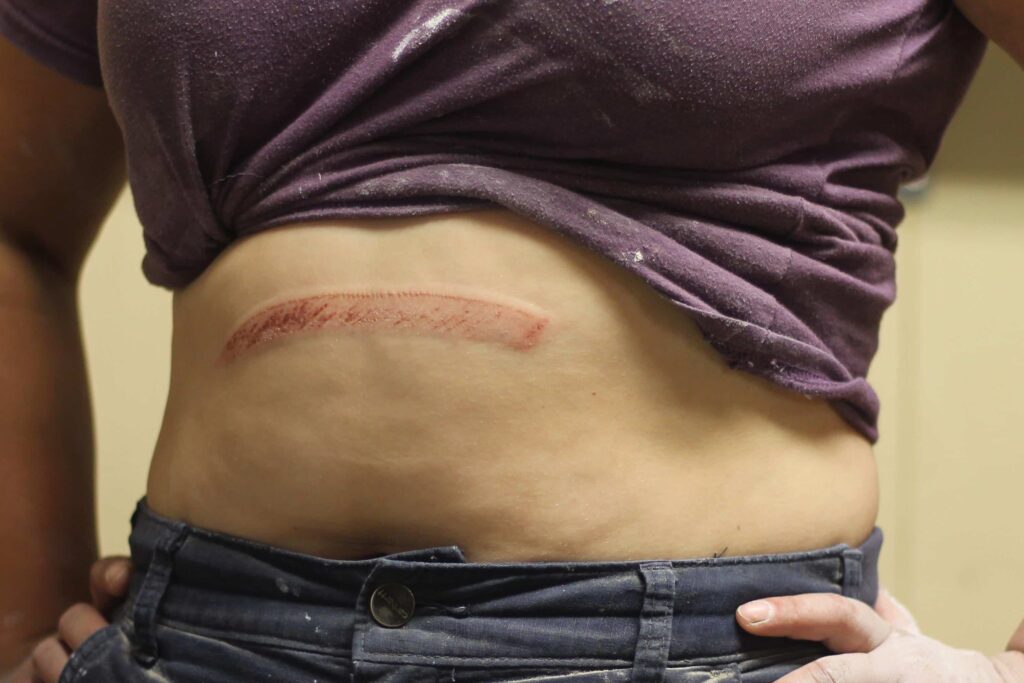
Kickback occurs when a board binds, twists, pinches the blade, or lifts during a cut. It is sudden, forceful, and frequently the cause of secondary injuries. The safest approach is to prevent the conditions that allow kickback to occur.
Before covering technique, ensure the saw itself is correctly set up. A poorly aligned fence, blade, or miter slot increases the chance of binding. New users should verify alignment or ask a skilled member for assistance. Chris Czarnik is happy to offer advice.
1. Reaching Toward a Running Blade
The most frequent lapse is reaching for an offcut while the blade is still spinning.
Avoid this by either shutting the saw off before retrieving material or using a push stick to clear debris away from the blade area. Maintain focus until the blade fully stops.
2. Cutting Freehand
A safe cut requires controlled and linear movement through the blade.
Cutting without a fence, miter gauge, or sled introduces rotation and instability, increasing kickback risk. Always guide workpieces with a proper reference surface or jig.
3. Removing the Riving Knife
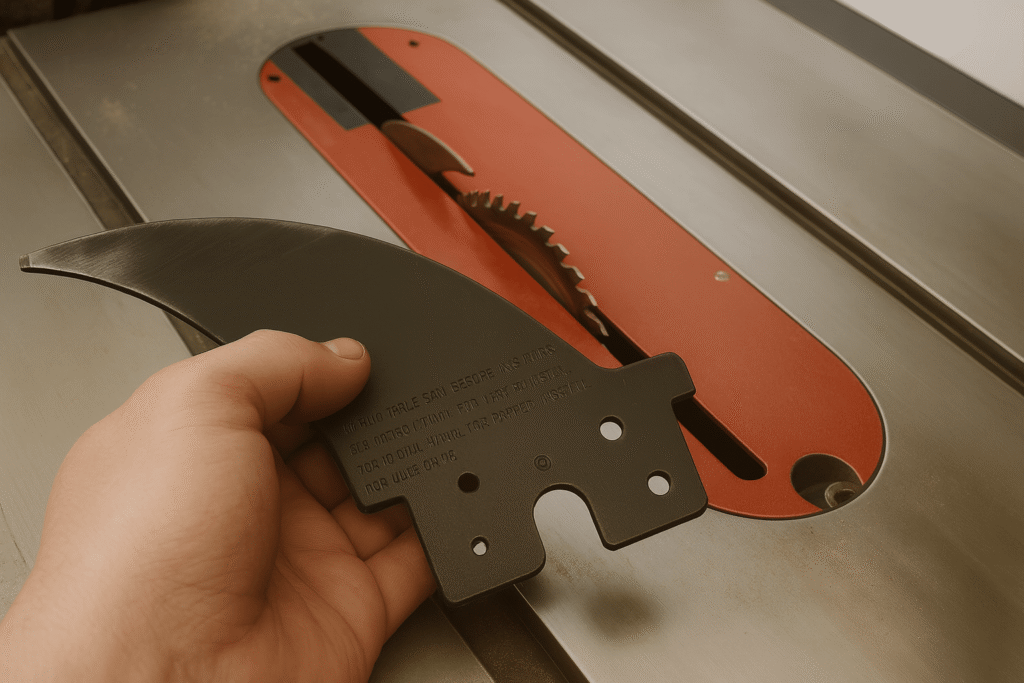
The riving knife prevents the kerf from closing on the rear of the blade.
Removing it increases the risk of binding and kickback. Leave the riving knife installed for all through cuts. For non through cuts, use a low profile alternative rather than removing it entirely.
4. Standing Directly Behind the Workpiece
Positioning your body directly in the kickback path exposes you to unnecessary risk.
Stand slightly to the side of the board’s travel path while maintaining stable control of the workpiece.
5. Setting the Blade Too High
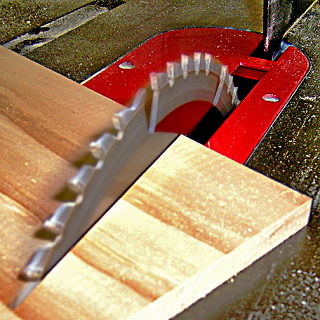
Exposing excessive blade height increases the chance of accidental contact.
The blade should clear the workpiece by approximately 1/8 inch. Higher settings provide no measurable benefit and increase hazard.
6. Using the Fence for Crosscuts
Using the rip fence to reference crosscuts can trap the offcut between the fence and blade.
Instead, use a miter gauge or crosscut sled. If you need repeat lengths, employ a stop block positioned in front of the blade so the offcut is free once the cut begins.
7. Incorrect Use of Push Sticks, or No Push Stick
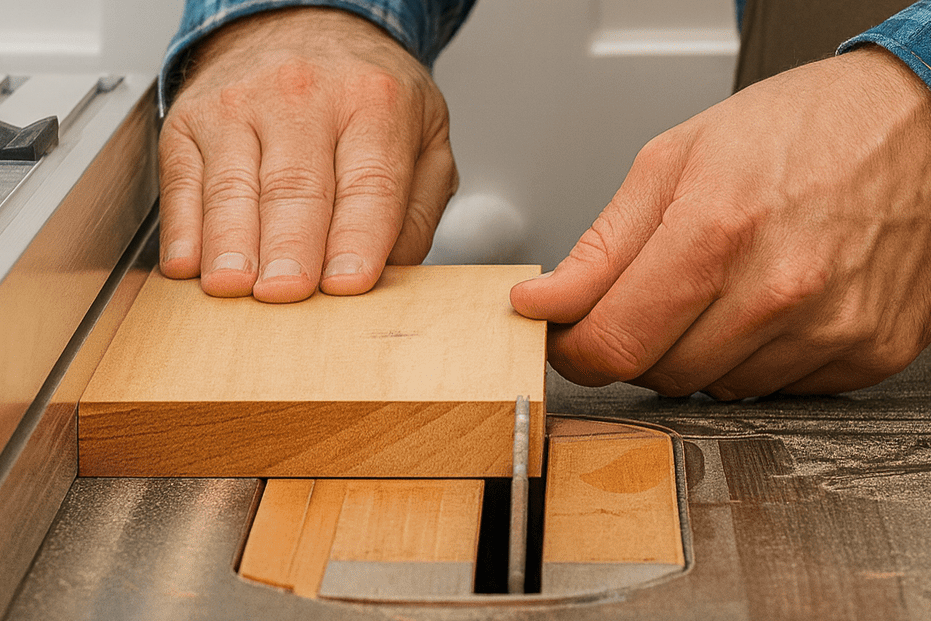
Push sticks should apply three directions of pressure:
- Forward through the blade
- Downward onto the table
- Laterally against the fence
Using only a long narrow push stick from behind the workpiece provides inadequate control. For narrow rips, supplement push sticks with featherboards for consistent lateral pressure.
8. Applying Pressure on the Outside Edge Past the Blade
Pressing the outer edge of the board after it passes the blade can close the kerf and cause binding.
Maintain lateral pressure between the blade and fence before the blade only. Once the leading edge passes the blade, rely on controlled forward pressure and proper push stick technique.
9. Ripping Warped or Unmilled Boards
Boards must have at least one flat face and one straight edge before being ripped.
Uneven stock can shift, twist, or lift into the blade. Joint or straighten one edge using appropriate tools or jigs prior to ripping.
10. Insufficient Outfeed Support

The table saw surface does not adequately support long stock.
Use an outfeed table or rollers to prevent the board from tipping, dropping, or levering upward during the cut. If you are unsure how to set up outfeed support at Kzoo Makers, ask a trained member.
11. Ripping Thin Strips Incorrectly
Placing the fence too close to the blade to cut thin strips increases burning, binding, and kickback.
Instead, place a stop in the left miter slot, butt the workpiece to it, bring the fence to the opposite side of the board, remove the stop, and cut. This produces consistent strips while keeping the fence at a safe distance.
12. Ignoring Feedback from the Saw
Unusual vibration, burning smells, or changes in sound often indicate misalignment, binding, or unsafe feed rate.
If anything feels abnormal, stop the cut immediately and assess the setup.
13. Skipping PPE
Proper PPE includes:
- Eye protection
- Hearing protection
- A dust mask or respirator
- Appropriate clothing and shop apron
These reduce the risk of long term hearing damage, respiratory problems, and injury from debris.
Learn the right way
https://www.hse.gov.uk/pubns/wis16.pdf